From War Prototype to Island Icon: The Remarkable History of the Moke
Rejected by the military, adored by Bardot, immortalized by Bond, and now reborn in Hawaii as a 100% electric icon. Sixty-plus years of the most improbable vehicle story in history.
There’s a vehicle that was rejected by the military, adopted by royalty, driven by a Bond villain, and parked in Brigitte Bardot’s driveway. It never had a roof, rarely went above 40 mph, and somehow became one of the most beloved vehicles in automotive history.
That vehicle is the Moke. And its story is unlike any other.
1959: Built for Battle
The Moke’s origin story begins not on a sunny beach, but in a Cold War military brief.
In the late 1950s, the British Motor Corporation (BMC) was tasked with a fascinating engineering challenge: design a vehicle light enough to be air-dropped behind enemy lines. Something that could fold flat into a cargo plane, land in a field, and get soldiers moving immediately.
BMC’s engineers — the same team behind the iconic Mini — drew up a spartan, open-air “buckboard” prototype. No doors. No roof. No frills. Just wheels, a motor, and a lot of ingenuity.
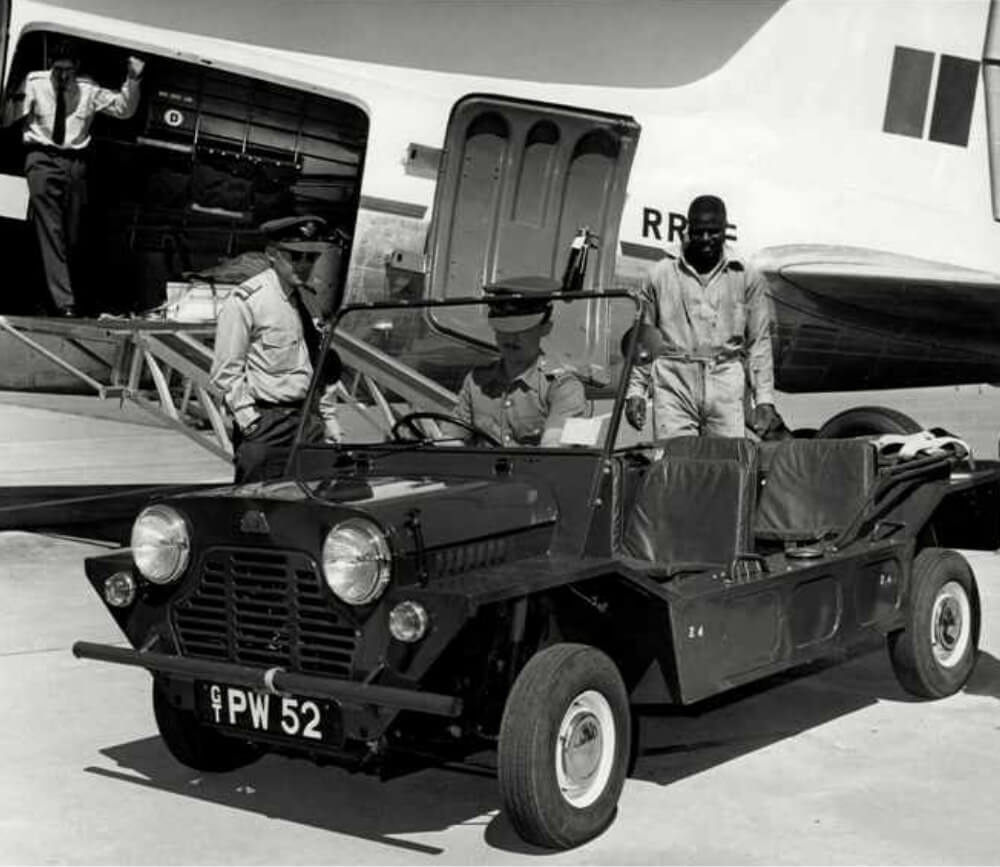 The original Mini Moke in military service — designed to be light enough to fly.
The British Army tested it and passed. Too low for rough terrain; the lightweight frame that made it air-drop-friendly made it unsuitable for combat.
The military said no. BMC had to figure out what to do with a brilliant little vehicle that had nowhere to go.
1964: Rejected by the Army, Loved by Everyone Else
Rather than scrap the project, BMC launched the Austin Mini Moke as a civilian vehicle. Cheap, cheerful, and completely impractical by conventional standards — no weather protection, minimal luggage space, barely more than a motorized go-kart.
And people absolutely adored it.
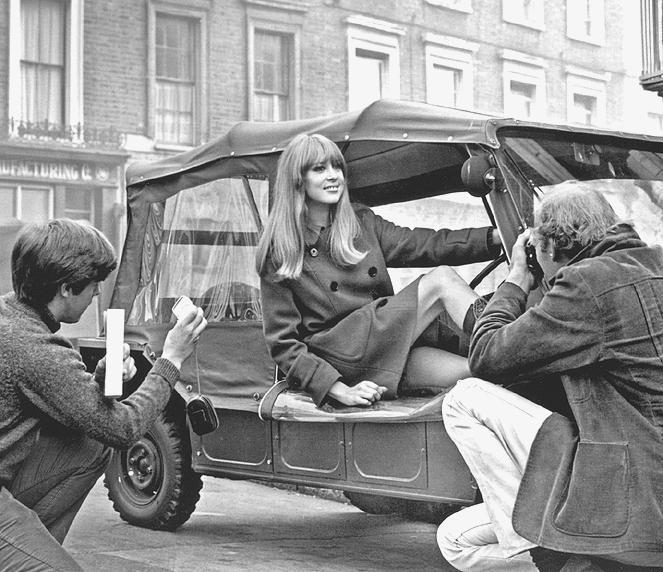 London, mid-1960s — the Moke was immediately adopted by the fashion and culture set.
The Moke had something no marketing campaign could manufacture: personality. It was joyful. It was social. It invited the world in rather than shutting it out. Driving a Moke wasn’t just transportation — it was a feeling.
Within a few years, the little car that couldn’t make it into the army had found its true home: sun-drenched coastlines of Europe and the Caribbean, where its open-air design wasn’t a flaw — it was the whole point.
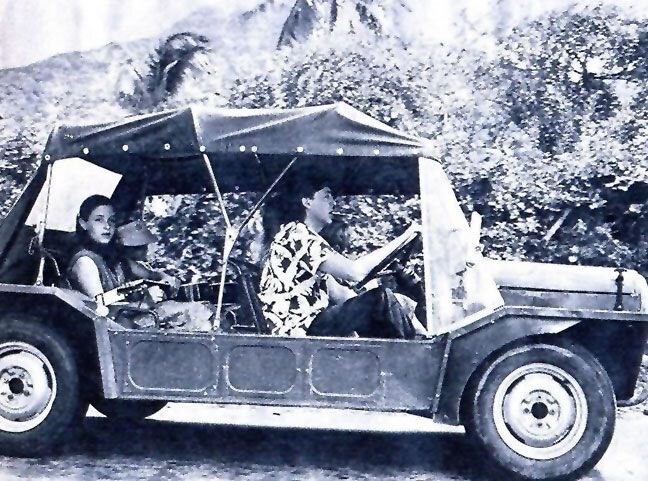 The Moke found its natural habitat almost immediately — warm climates, open roads, good company.
The 1960s & 70s: Bardot, Bond, and the Beach
Brigitte Bardot was photographed cruising through St. Tropez in a Moke — dogs piled in the back, laugh lines on her face — cementing its status as the vehicle of choice for the European jet set. The French Riviera’s narrow coastal roads and sun-baked summers were made for it. Colorful Mokes became as synonymous with St. Tropez as rosé and striped linen.
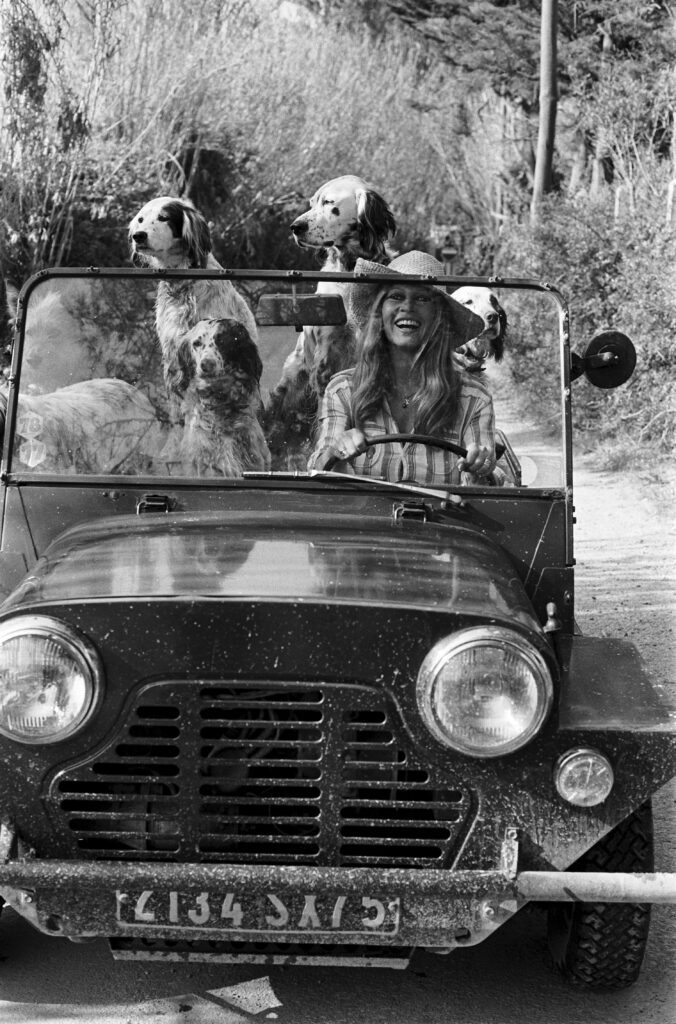 Brigitte Bardot and her dogs — the Moke as a way of life.
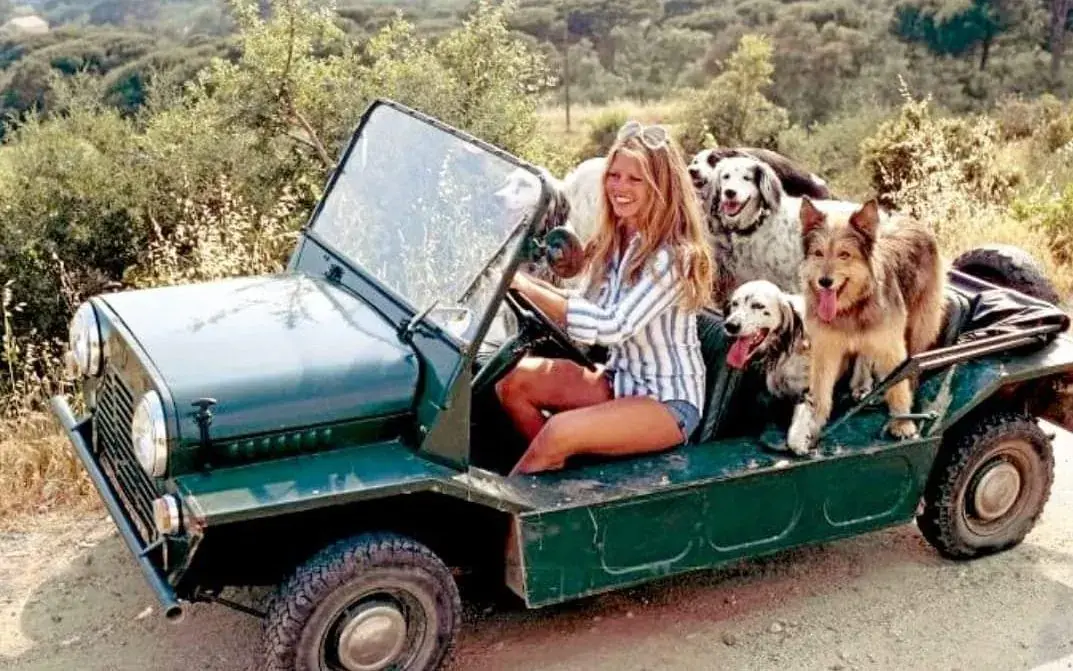 Some things never change. The Moke still attracts exactly this kind of energy.
The Moke’s magic wasn’t limited to beaches and celebrities. It crossed into television culture too — most memorably as the white “Taxi” Moke driven through the surreal village in The Prisoner, the iconic 1967 British series starring Patrick McGoohan. There was something perfect about a vehicle with no doors and no pretense serving as the transportation of a man who refused to be contained.
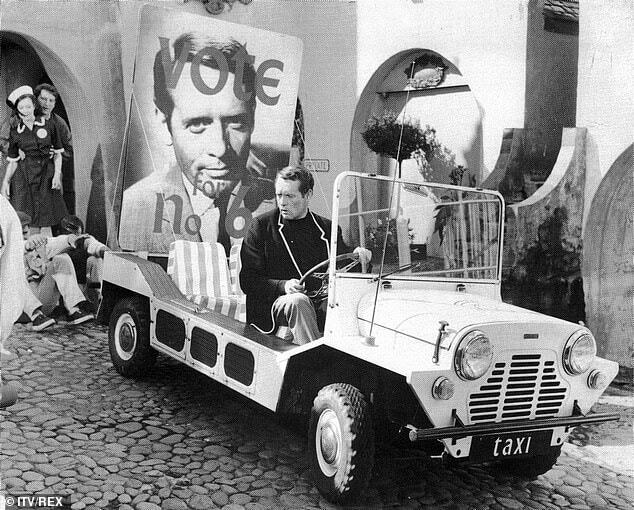 Patrick McGoohan in The Prisoner (1967) — the Moke as a symbol of open-air freedom, even in captivity.
Then came Hollywood’s biggest franchise.
The Moke appeared in four James Bond films — including Live and Let Die and The Spy Who Loved Me — as the quintessential island vehicle. Roger Moore, behind the wheel on a Caribbean set, looked exactly as cool as that sounds.
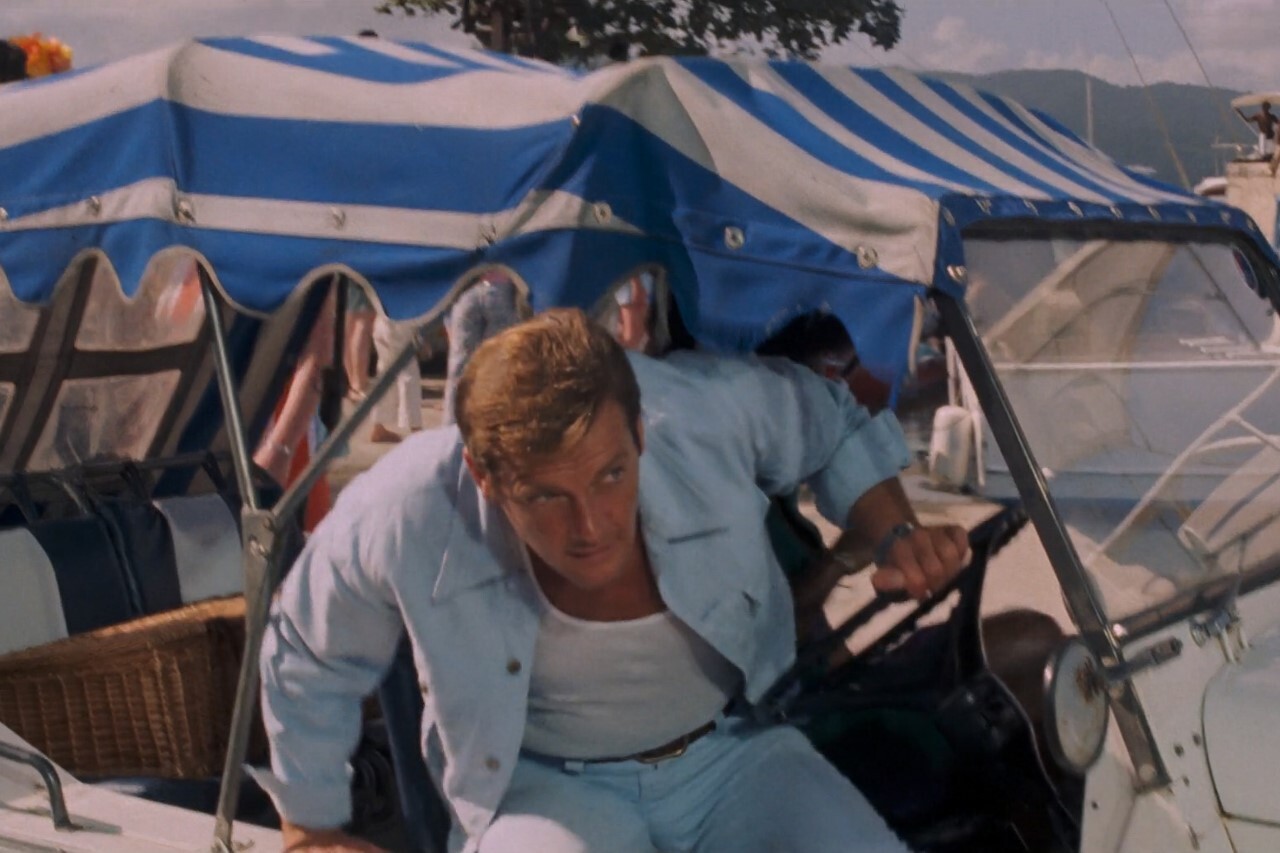 Roger Moore behind the wheel of a Moke — because even Bond knew that sometimes less is more.
By the 1970s, Mokes were everywhere warm and beautiful: the beaches of Australia and Portugal, the Caribbean islands, the Algarve coastline, the luxury resorts of the Mediterranean. Production had shifted globally to serve international demand, and new variants kept appearing — including the sporty Moke Californian, aimed squarely at the fun-in-the-sun crowd.
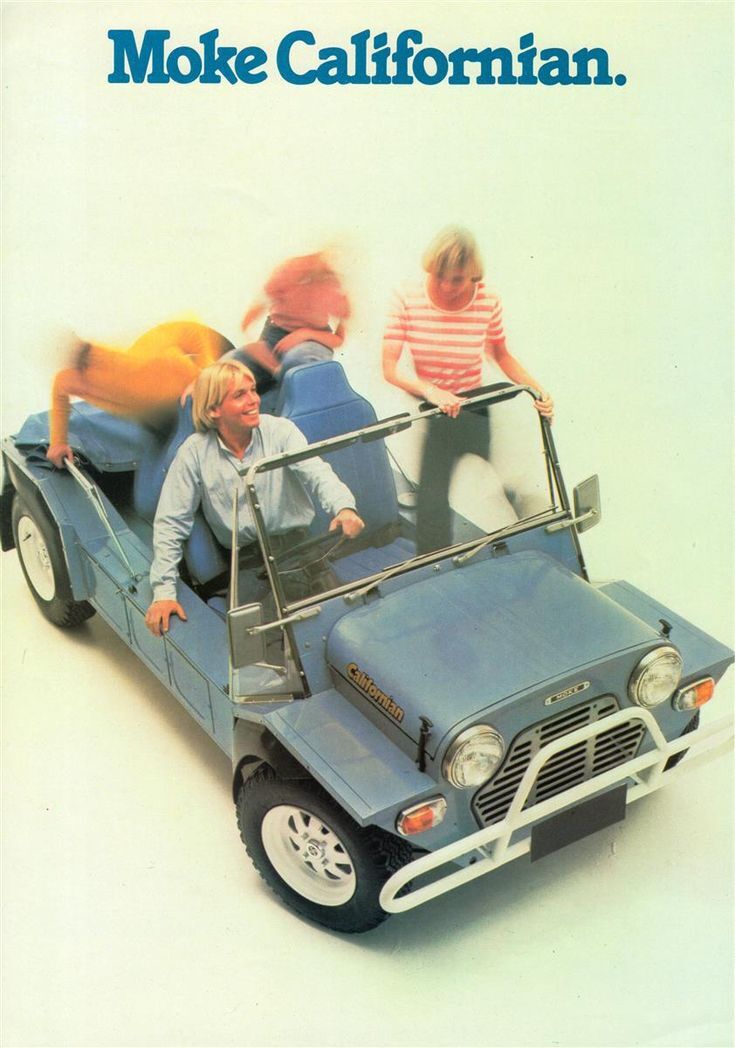 The Moke Californian — the brand leaning fully into its carefree, open-air identity.
The Moke had gone from a military reject to a global icon.
The Dark Chapter: 1993
Production of the original Moke ended in 1993.
For nearly three decades, the Moke lived on only in memory — in vintage car shows, sun-faded photographs, and the stories of resort owners who still swore by the ones they had left. A whole generation grew up without ever seeing one in the wild.
The world moved on to SUVs and minivans and sensible crossovers. The Moke, with its refusal to be anything other than exactly what it was, seemed like a relic of a more carefree era.
But legends don’t stay gone forever.
2022: The Electric Resurrection
In 2022, MOKE International brought the Moke back — and they did it right.
Rather than simply reviving a nostalgia product, MOKE went 100% electric. No gas engine. No compromise. The first car brand from the 1960s to fully transition to electric power.
The new Electric MOKE is unmistakably the same vehicle — open-air, low, joyful, social. The silhouette is faithful to the original. But underneath, it’s a completely modern machine: zero emissions, whisper-quiet, and built for the kind of luxury resort environments where it has always belonged.
And MOKE International didn’t just build an electric vehicle — they built one that passed every regulatory test the US puts in front of automakers. MOKE International is the first and only low-volume EV manufacturer in the US to hold approvals from all three regulatory bodies: NHTSA, the EPA, and CARB. Federal safety standards. Federal emissions standards. California clean air standards. All three cleared. It isn’t a golf cart. It isn’t a novelty. It’s a road-legal electric vehicle with six decades of design heritage.
Same soul. Better for the planet.
Today: The Moke Comes to Hawaii
This is where Ohana Moke enters the story.
We believe that Hawaii — its culture, its landscapes, its commitment to aloha — is the perfect next chapter for the Moke. The open ocean air. The volcanic coastlines. The resort communities where guests come not just to stay somewhere beautiful, but to experience something.
The Moke has always been a vehicle that transforms a drive into an event. You don’t just get in and go — you feel the wind, you see everything, you arrive somewhere with salt in your hair and a grin on your face. That’s the Ohana Moke experience.
We’re bringing the Electric MOKE to Hawaii’s finest resorts — partnering with hotels to offer guests something they genuinely can’t get anywhere else. A ride as iconic as the islands themselves.
Sixty-plus years after a British Army test that ended in rejection, the Moke is back — cleaner, quieter, and more at home than ever.
The Moke’s Legacy
What makes a vehicle iconic? It’s rarely about speed or power or innovation. It’s about feeling. The Moke endures because it makes people feel something — freedom, joy, connection to the moment and the place.
From a Cold War engineering brief to Brigitte Bardot’s garage to four James Bond films to the beaches of the Caribbean and now the shores of Hawaii — the Moke has always landed exactly where it belongs.
We’re honored to be the next chapter.
Follow @OhanaMoke for the ride. ⚡🌴